Category

Pediatric

Category

Do you know the role of Vaccination? Aarogyaone is here with its research.

Vaccines protect our children like superheroes against diseases like tetanus, polio, and diphtheria that might be fatal. Following vaccination, antibodies are produced that aid in the ongoing battle against serious infections.

Making sure your child receives the prescribed vaccinations not only protects their health but also improves the well-being of the entire community. Additionally, vaccines operate by subjecting the child’s immune system to a dead or damaged form of the disease-transmitting bacterium, enabling the immune system to develop antibodies.

vaccinationIn spite of certain safety concerns, vaccines are regarded as among the safest and most effective medications. Since the majority of vaccinations are given between birth and 6 years of age, parents are encouraged to carefully document their child’s vaccination history.

Vaccination enhances learning and imagination ability

1- Preventing childhood illness:

Children absorb information and experiences at a phenomenal rate. However, that also exposes them to a wide range of infectious diseases, some of which can have detrimental effects on health.

That is why the role of vaccination is very important as it protects them against illnesses including measles, rubella, mumps, whooping cough, and others. You can ensure that your child stays healthy, happy, and prepared for a bright future by giving them a strong line of defense against these potentially hazardous diseases.

2- Improving cognitive growth:

Are you aware of the fact that immunization can boost your child’s cognitive growth? Studies have indicated that vaccines can protect against some infections like meningitis and influenza which can have long-term consequences on a child’s cognitive development.

Your child will have a higher chance of realizing their full scholastic and intellectual potential if they have been given vaccines against these diseases.

3- Keeping up with school attendance:

We don’t want our kids to miss school on any day. But we all know, children are vulnerable to diseases and viruses, which could hamper their school attendance.

One can halt the spread of diseases and viruses among children through vaccination, which also lowers the risk of extensive outbreaks and maintains a safe and conducive learning environment in classrooms. You are safeguarding your child and fostering a healthy school environment by making sure they get all of their prescribed vaccines.

4- Creating a healthy future:

Vaccination has long-term benefits that extend beyond childhood. Immunity acquired through vaccination can help in fighting against diseases even in adulthood. There will be a comparison for your child to handle the challenges of life with a robust and resilient immune system if you start early and diligently follow the prescribed vaccination schedule.

BLOW OUT THE MYTHS:

Several myths surround vaccination. Let’s dispel those myths.

A- Myth: Vaccine causes Autism

Fact: numerous scientific investigations have established that there is no connection between autism and vaccination. The study that made this connection has been debunked, and the author has had his medical license suspended. Vaccines do not cause autism,  they are completely safe.

B- Myth: Natural immunity is better than the vaccine-induced immunity

Fact: natural immunity can develop after a person has fully recovered from an illness. But by the time a person acquires natural immunity, he is vulnerable to severe complications and even death. Vaccines offer a safer way to build immunity without risking the person’s life.

ROLE OF VACCINATION

Immunization is essential in preserving your child’s health and overall well-being. The developments in medical sciences now allow vaccines to provide safeguards against a wider spectrum of diseases. Vaccination has eliminated many serious diseases.

Additionally, vaccinations not only defend your child but also contribute to safeguarding the health of the entire community. You may help stop the spread of these illnesses by making sure that your child and those who can receive vaccines are fully immunized.

Immunization has several advantages for your family’s health as well as saving time and money. Vaccination is a smart investment and insurance covers it often. Children from low-income families can receive immunization free of cost through government-funded vaccination programs.

Last but not least; immunisation is essential for safeguarding the next generation from fatal diseases. Now one can say goodbye to previously life-threatening diseases that had the potential to pass from one generation to another through extensive vaccination drives.

For example, we have successfully eliminated globally and in the United States, rubella (German measles) no longer poses a serious risk to expectant mothers and their unborn child. We may look forward to a time when no disease endangers the health of our kids by continuing to immunize our kids.

CONCLUSION

Vaccination plays a vital role in ensuring your child’s health and the safety of the entire community. Let’s harness the power of vaccinations to provide our children with a better and healthier future.

Since every kid deserves to live a healthy and safe life, it is important to make well-informed decisions on vaccines by considering the facts. We should remember that knowledge is power. Please feel free to inquire if you have any specific queries regarding the role of vaccination.
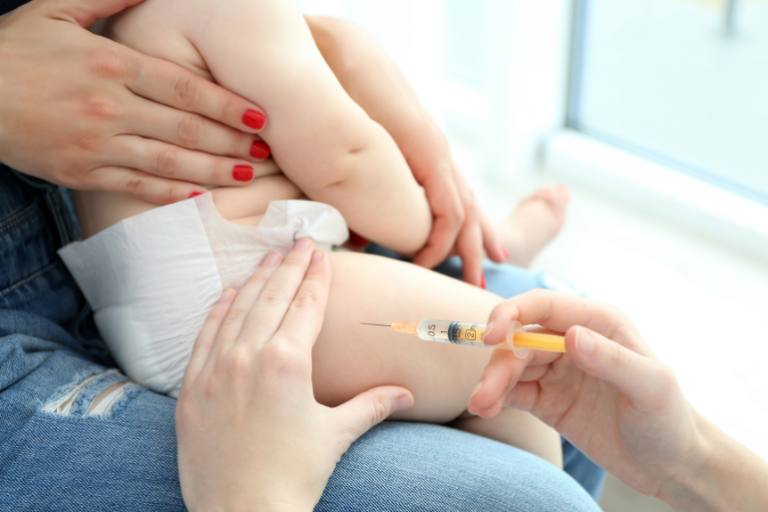

Do you know how important it is to get your children vaccinated in time?  Vaccination is whose responsibility? Children are administered their first vaccine as soon as they are born and continue to receive it till 6 years.

Vaccinations help in building immunity against fatal diseases such as polio, measles etc that might attack your child in the future. You must have understood that vaccination provides your child a safe and healthy future and it will be dangerous to miss out on any vaccine.

Several vaccines are given to a child at different times and sometimes it becomes difficult to keep track of the vaccination schedule. So let’s find a solution to this problem.

Vaccination is whose responsibility?

1- Parents have the primary responsibility-

When it comes to vaccination is whose responsibility, parents and guardians are the ones who are responsible for ensuring that their child receives the necessary vaccine timely. To protect their kids from diseases and illnesses, parents need to stay updated about their child’s prescribed vaccination schedule and they must know which vaccines are required and when.

The prominent way to ensure that your child has received the necessary vaccines on time is by actively seeking details and coordinating with medical professionals.

2-Role of healthcare professionals

Healthcare professionals, along with parents, play a significant role in the entire vaccination journey. You will be assisted by your pediatrician or family doctor, in the vaccination journey, who will also address your concerns and offer advice based on your experience.

Your child’s vaccination status will be monitored, and they will make sure that the necessary vaccines are given at the right time. So without any hesitation, get in touch with your doctor and build an effective partnership to safeguard your child’s health.

3-Implementing immunization regulations in the institution

Institutions such as schools can help make sure that your children are vaccinated sufficiently. During the time of admission, many schools have strict regulations regarding vaccination.

These regulations help the school to protect the health of all students and stop the spread of infectious diseases. Hence, it is important to maintain a record of your child’s vaccination schedule at schools and childcare centers.

4- Vaccination initiative by the government

Governments of all countries support the vaccination process and boost it by providing vaccines either free or at minimal cost. They formulate and execute programs highlighting the importance of child immunization. Governments provide free-of-cost vaccines to those who cannot afford expensive vaccines due to financial constraints.

Immunisation: whether a choice or a responsibility

Let’s start by discussing personal choice. Having the power to make decisions that affect your own life is the essence of personal choice. Some people believe that this freedom should include the option of choosing whether or not to receive vaccinations. It’s your body, after all, correct?

The concept of moral responsibility is just the opposite. According to this viewpoint, we have the responsibility to defend not just ourselves but also others close to us. This includes receiving vaccines in order to protect vulnerable groups and stop the spread of diseases. It involves putting the interests of the groups above those of the individuals.

Let’s now consider some of the justifications for the individual choice. The potential side effects are one of the key issues brought up by vaccine skeptics. Some people have a fear that vaccines could hurt them and have long-term effects. The benefits of vaccines clearly outweigh any potential hazards, despite the fact that vaccines, like any other medical procedure, can have side effects.

On the other hand, the proponents of moral responsibility point out that throughout history, vaccines have played a crucial role in eradicating or controlling fatal diseases.

Because of extensive vaccination, diseases like smallpox, and polio which previously wreaked havoc on communities are now nearly extinct. By getting immunised we help to protect public health as well as ourselves.

It is crucial to understand that moral responsibility and personal choice are not opposing concepts. In reality, they are capable of peaceful coexistence. We can strike a balance between upholding individual autonomy and acknowledging how our choices affect other people.

What should you do to keep your vaccination record up-to-date:

1- Consult your Paediatrician

When it comes to your child’s health, your pediatrician is your trusted advisor. They will provide you with a detailed vaccination schedule customized for the needs of your child. Talk to them about the necessary vaccinations and the appropriate ages for receiving them. You will be better able to stick to the suggested schedule if you have a clear knowledge of it.

2- Set up Reminders

Due to our hectic life, we can easily forget important dates and appointments. Use a calendar app or set reminders on your phone to make sure you do not miss out on any vaccine. There are other ways as well to set reminders such as using sticky notes or a visible whiteboard. You can choose any of these options according to your lifestyle.

3- Keep in touch with school and caregivers

Keeping track of vaccination becomes much easier when you are assisted by those who are involved in your child’s care. Make sure to share your child’s vaccination schedule with the school and provide copies of all necessary documents. This way you can ensure that everyone who is in charge of your child’s care is aware of their vaccination needs.

4- Keep Inquiring and Stay up-to-date

Take the initiative to learn about any new vaccine and modifications to the current vaccination schedule. If you need any updates and suggestions, keep up with your local health department, the Centres for Disease Control and Prevention (CDC), or the World Health Organisation (WHO). Such information will enable you to make wise choices for your child’s health.

5- Keep a Health Record

Keep track of every vaccine given up until the age of six and cross them off as they are completed. You can also take the help of ArogyaOne, which allows you to upload and retain all of your health-related documents.

Conclusion: Vaccination is whose responsibility? </strong>

It takes a team effort to vaccinate your children. It is primarily your obligation as parents to stay informed and make arrangements to get your child vaccinated. Healthcare professionals are always there to help and guide you in the process of vaccination and ensure that your kid is administered the appropriate vaccine at the appropriate time.

Schools are strict with immunization regulations and encourage parents to abide by the rules. By making such rules, schools contribute to safeguarding the health of the students and the community. Last but not least; the government also plays a major role in the immunization process by ensuring that vaccines are available to everyone.

So, we have given all the answers for vaccination is whose responsibility.

We cannot d

eny that vaccination is an essential step in protecting our kids’ health and blocking the spread of diseases. We can all work towards building a better and safer future for our children by staying informed and actively participating in the vaccination process.

Pin It