Tag

Ayushman Bharat Digital Mission

Browsing

अस्पताल जाना अपने आप में ही एक मानसिक तनाव है और जब हमे लम्बी लाइन में लगना पड़ जाये तो यह समस्या दुगुनी हो जाती है। आज हम जानेंगे कि “आरोग्यवन : स्कैन और शेयर” के माध्यम से हम कैसे इस समस्या से छुटकारा पा सकते हैं।

इसके मद्देनज़र हमारी सरकार लगातार काम कर रही है। अब आप आयुष्मान भारत डिजिटल मिशन (ABDM) के तहत अक्टूबर 2022 में शुरू की गई ABHA-आधारित स्कैन और शेयर सेवाओं का उपयोग करके लम्बी कतारों से छुटकारा पा सकते हैं।

बहुत से ऐसे लोग हैं जिनको   ABHA-आधारित स्कैन और शेयर के बारे में जानकारी नहीं है।  लोगों में इसकी जागरूकता बढ़ने के लिए हमने इस ब्लॉग में सारी जानकारी उपलभ्ध करवाई है।  आप इस ब्लॉग को पूरा पढ़ें और सरकार द्वारा दी गयी स्वस्थ्य सुविधा का लाभ उठायें।

स्कैन और शेयर के माध्यम से आप डिजिटल तरीके से ओपीडी परामर्श के लिए अपना टोकन प्राप्त कर सकते हैं।

यह एक  कागज रहित सेवा विशेष रूप से शारीरिक रूप से विकलांग मरीजों, गर्भवती महिलाओं और बुजुर्गों के लिए एक शानदार परिवर्तन लेकर आई है। स्कैन और शेयर की मदद से अब सरकारी अस्पतालों में लंबी कतारों में खड़े होने और अपनी बारी का इंतजार करने की आवश्यकता नहीं है।

डिजिटल ओपीडी पंजीकरण (टोकन) कैसे प्राप्त करें?

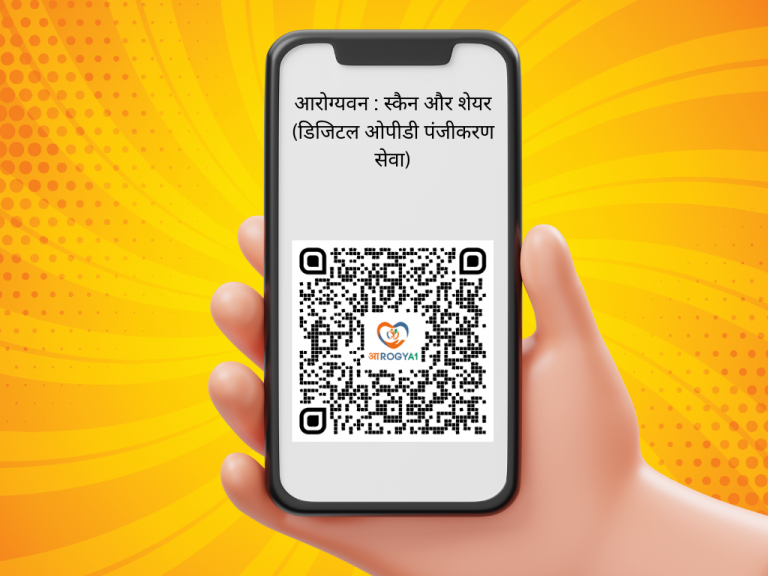
यह प्रक्रिया बहुत ही सरल है। सभी सरकारी और ABDM से जुड़े स्वास्थ्य केंद्रों में, पंजीकरण काउंटर पर आपको एक क्यूआर कोड दिखेगा। क्यूआर कोड स्कैन करने के लिए, Aarogyaone ऐप डाउनलोड करें।
Aarogyaone एक एनएचए द्वारा स्वीकृत, ABDM से जुड़ा हुआ पीएचआर ऐप है। एक बार जब आप क्यूआर कोड स्कैन कर लेते हैं, तो आप अपना ओपीडी पंजीकरण टोकन प्राप्त कर सकते हैं।

  • Aarogyaone ऐप डाउनलोड करें (app.aarogya.one)
  • पंजीकरण काउंटर पर उपलब्ध क्यूआर कोड स्कैन करें
  • डिजिटल ओपीडी पंजीकरण के लिए अपना टोकन प्राप्त करें

इसके अलावा, ऑनलाइन पंजीकरण के लिए यह सुनिश्चित करें कि आपका ABHA खाता बनाया गया हो। अधिक जानकारी के लिए आप हमारा ब्लॉग पढ़ सकते हैं: “ABHA कैसे बनाएं?”

स्कैन और शेयर के कुछ रोचक तथ्य :

एनएचए (NHA) ने ऑनलाइन ओपीडी पंजीकरण के लिए 4 करोड़ से अधिक ओपीडी टोकन बनाने का प्रभावशाली मील का पत्थर प्राप्त किया है।

इसके अलावा, 5435 से अधिक अस्पतालों और स्वास्थ्य सुविधाओं में स्कैन और शेयर सेवा उपलब्ध है। औसतन, 1.3 लाख लोग इस फीचर का उपयोग करके ऑनलाइन ओपीडी पंजीकरण के लिए अपने टोकन बना रहे हैं।

फिर आप पीछे को हैं? आप भी डिजिटल सशक्तिकरण का लाभ उठायें और बाकी अन्य लोगों में भी इसके जागरूकता फैलाएं।

स्कैन और शेयर के लाभ

अस्पतालों की लंबी कतारों से दूर रहें : सरकारी अस्पतालों की भीड़ से कोई भी अनजान नहीं है। साथ ही लंबी कतारों में खड़ा होना वास्तव में कष्टदायी और तनावपूर्ण  है। “स्कैन और शेयर” फीचर का उपयोग करके आप अपना टोकन ऑनलाइन प्राप्त कर सकते हैं और अपना तनाव थोड़ा कम कर सकते हैं

सटीक जानकारी का आदान प्रदान : मैनुअल पंजीकरण के दौरान हम कभी-कभी नाम या अन्य विवरण में गलत जानकारी दे सकते हैं लेकिन स्कैन और शेयर की मदद से, सभी सटीक विवरण स्वास्थ्य सुविधाओं के साथ साझा किए जाएंगे।

शीघ्र ओपीडी पंजीकरण: स्कैन और शेयर के साथ, उपयोगकर्ता कुछ ही क्लिक में अपना ओपीडी अपॉइंटमेंट प्राप्त कर सकते हैं।

पंजीकरण के दौरान अधिक सवाल नहीं: मैनुअल प्रक्रिया के विपरीत, स्कैन और शेयर के साथ, आपसे अधिक सवाल नहीं पूछे जाएंगे क्योंकि आपके स्वास्थ्य रिकॉर्ड पहले से ही ABHA से जुड़े हुए हैं। आपको बस अपना टोकन नंबर और वर्तमान स्वास्थ्य समस्या साझा करनी होगी।

मेडिकल लैब्स के लिए ऑनलाइन बुकिंग: सरकार ने मेडिकल लैब्स के लिए भी स्कैन और शेयर फीचर शुरू कर दिया है और आप अपने टेस्ट्स के लिए अपॉइंटमेंट भी बुक कर सकते हैं।

निष्कर्ष:

आरोग्यवन : स्कैन और शेयर, हमारे लाभ के लिए बनाया गया है और हमें डिजिटलाइजेशन की शक्ति का लाभ उठाना चाहिए। लंबी कतारों को छोड़ें और आराम से अपनी अगली ओपीडी परामर्श के लिए टोकन बुक करें।

और हाँ ! क्यूआर कोड स्कैन करने के लिए Aarogyaone ऐप डाउनलोड करना न भूलें!
Are you still standing in long queues for OPD registration?

Now you can skip the queues by availing of the ABHA-based Scan & Share services launched under Ayushman Bharat Digital Mission (ABDM) in October 2022. The government of India is continuously working to strengthen the digital healthcare sector. In this regard, they have taken the initiative of Scan & Share with which people can get their token digitally to avail of OPD consultation.

The outstanding paperless service has brought an exceptional transformation, especially to physically challenged patients, pregnant ladies, and elderly people. With scan & share, there is no need to stand in long queues of government hospitals and wait for your turn.

How To Get Digital OPD Registration?

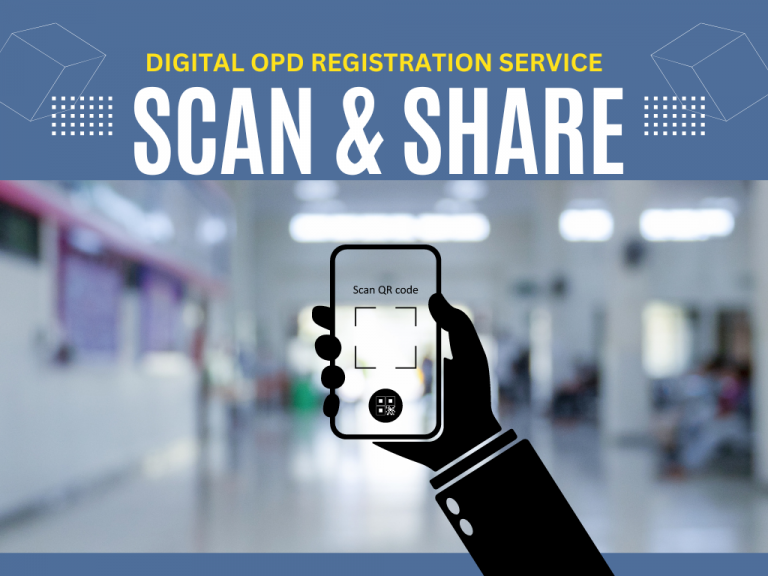
The process is straightforward. In all government and ABDM-integrated facilities, you will get a QR code display at the registration counter. To scan the QR code, download the Aarogyaone app. Aarogyaone is a NHA-approved, ABDM-integrated PHR app. Once you scan the code, you can generate your token for OPD registration.

  1. Download Aarogyaone App (www.app.aarogya.one)
  2. Scan the QR code available at the registration counter
  3. Get your token towards digital OPD registration.

Moreover, to get online registration make sure to have your ABHA account created. For more details you can read our blog: What is ABHA and How to create ABHA?

Amazing Fact About Scan & Share Feature

NHA (National Health Authority) has reached an impressive milestone by creating more than 4 crores of OPD tokens for online OPD registration.

Furthermore, the Scan & Share service is available in more than 5435 hospitals and healthcare facilities. Also, on average, there are 1.3 lakh people who are using the scan &  share feature to generate their tokens for online OPD registration.

Benefits Of Scan & Share

  1. No Long Queues at Hospitals: We are very well aware of the crowd of government hospitals and standing in a long queue is really painful. Using the “Scan & Share” feature you can get your token online.
  2. Accurate Information Processing: In manual registration, it may be possible that we share some wrong information for a name or other details under stress. But thanks to Scan and Share, all accurate details will be shared with the healthcare facilities.
  3. Quick OPD Registration: With Scan & Share, users can get their OPD appointment within a few clicks.
  4. No More Questions During Registration: Unlike the manual process, with Scan & Share, you won’t be asked many questions because your health records are already linked with ABHA. Simply, you need to share your token number and current health problem.
  5. Online Booking for Lab Tests: The Government has also started the Scan & Share feature for laboratories and you can book your appointment for your tests as well.

Final Thoughts!

Scan & Share is made for our benefit and we should leverage the power of digitalization. Skip the queues and comfortably book your appointments for the next OPD consultation. And don’t forget to download the Aarogyaone app to scan the QR code.

Are you aware of Healthcare Challenges in India? Our healthcare sector has advance infrastructure because we have hospitals like AIIMS where all the medical facilities are available. Apart from that there are so many technically smart private hospitals to take care of the people at the earliest. Despite all these, some remote areas are unable to access the services because of their location.

Today, we will discuss the major healthcare challenges in India. What is holding us back? Knowing them will help us to get concrete solutions. Before jumping to the topic, we know our government is aggressively working to raise the healthcare infrastructure and, in this series, they have initiated so many health missions under their ABDM (Ayushman Bharat Digital Mission) program.

Furthermore, the World Health Organization says everyone should get good healthcare, no matter where they live. As per our research we have found, some healthcare challenges in India that are stopping us from reaching the level where we want to be. Let’s have a look at them.

Major Healthcare Challenges in India:

Awareness Of Health: It is very common practice, that many of us don’t care for our health. They don’t know how to maintain hygiene or first aid treatment while being sick. People believe, that sickness, seasonal fever, cough, cold, etc will go on its own. They simply live in their routine work.

We believe they should be given the right education where they should be taught “Self-Care”. Once people start maintaining hygiene and take the right steps at the very initial stage of sickness, the majority of health issues will be solved before reaching the hospitals.

Specialized Healthcare Infrastructure Accessibility: This problem majorly belongs to remote areas where PHCs (Primary Health Services) are available but not specialized healthcare services. In order to get specific treatment or consultation, the patients have to rush to the cities to get medicines or consultations. Sometimes in serious conditions, things go out of control.

To overcome the problem, along with PHCs (Primary Health Centres), Telemedicine can play an important role. People/patients living in remote areas can connect to a specific medical expert and depending on their health condition, a prescription shall be given.

Shortage of Qualified Medical Experts: The Medical domain has a shortage of qualified experts in the specific medical field. Due to the shortage of qualified manpower, patients need to wait for their turn. Moreover, the problem is majorly found in the rural areas.

To solve these issues, we should have more medical colleges and training centers. There should be proper training programs to attend to patients appropriately and guide them efficiently.

Health Insurance Awareness:  Under the government’s PM-JAY program, an Ayushman Card is given. The card covers health expenses of up to 5 lakhs INR for the needy families of the society as per SECC (Socio Economic and Caste Census). Many people in this class can have their Ayushman Card but they are unaware of it.

Apart from that there are so many insurance plans are available that cover our health expenses. The premiums towards such insurance are genuine and worthy. However, many people are still not aware of it.

To solve the problem, people must have information about such programs. They can get world-class medical facilities either free of cost (if they are eligible for the Ayushman Card) or by taking health insurance plans whose premiums are pocket-friendly.

You can refer to our blog (How to check your Ayushman Card Eligibility) to get more information.

Accountability: Private hospitals are doing their best to save people’s lives by providing world-class treatment. However, in some private hospitals’ patients have to run behind unnecessary lab or diagnostic tests. Sometimes medical team gives higher dosages of medicines to the patients. Earning money is their ultimate aim. Sometimes medical staff don’t treat patients well or make mistakes.

We need to make sure that they are responsible and they must execute their duties. To solve the problem, there should be a place where people can lodge their complaints. Higher authority should intervene so that people can get proper treatment.

Final Thoughts

We hope the above-mentioned Challenges of the healthcare sector in India are clear now. As we all know health is wealth. and when we are fit, we can conquer all the other problems of our lives.

To fix these problems, we need to work together. The government should spend more money on healthcare and make sure there are enough hospitals and clinics in villages. They should also train more medical experts to attend to the patients as soon as possible.

Apart from that, the healthcare facilities should be accessible to everyone. We can go for Telemedicine actively. However, there should be some brackets for private hospitals so that they can’t charge more and people can get quality treatment in pocket-friendly manner.

Along with the government, it is our primary responsibility to contribute our bit to strengthen India’s healthcare infrastructure. We should spread awareness for “Self-Care” and motivate people to help others (especially the illiterate people) wherever they can.

Furthermore, we are living in a digital era where we all have basic information to take care of ourselves. But we ignore them or take them lightly. The majority of health issues come because of poor or unbalanced lifestyles.

For example: We are quite aware, that eating junk food, not doing physical activities, and less than 8 hours of sleep, can harm our health. Most people don’t care, they simply follow these bad habits for their short-term happiness. But it is high time, we should take ownership of our health and only then we can hope for advanced healthcare infrastructure for our country.

We always wish you good health! Let’s make India fit and healthy!

This blog helps you to get information using which you can know your Eligibility for Ayushman Card (PM-JAY).

PM-JAY

Pradhan Mantri Jan Arogya Yojana which we call PMJAY is a health insurance plan initiated by the Indian government, especially for that class of society who has the lowest income as per the SECC database. Such families get support for 5 lakhs INR towards their medical expenses. In our previous blog we have written detailed information about PM-JAY benefits and if you are looking to refer, please browse our blog.

Now a question that usually comes to one’s mind: How can I check my eligibility for PM-JAY? Or what criteria need to be fulfilled for an Ayushman Card or my eligibility for an Ayushman Card?

Our blog contains answers to each of such queries. Unlike the ABHA Card, the everybody can’t get  Ayushman Card. The medical cover under PM-JAY is available for needy families only. In order to get or apply for Ayushman Card, firstly you need to verify your eligibility for the same.

How To Check Your Eligibility for Ayushman Card?

One can check the eligibility for the Ayushman card “ONLINE & OFFLINE”. Follow the steps and then you will come to know, whether you can get medical benefits under PM-JAY or not.

Online Method:

  • Visit official website https://www.pmjay.gov.in
  • On the top line of the home page you will “Am I Eligible”, click on it.
  • Enter Your Mobile Number
  • Fill the Captcha
  • Click on Generate OTP
  • Enter the OTP that you have received on your Mob. No
  • Verify the OTP
  • If the OTP is verified, you will be taken to the detailed section otherwise you will be on the same page.
  • Enter the asked information accurately such as your Name, State, Family Members, Income, Age, etc.
  • Once all the details are filled “SUBMIT” it.

After analysis, you will get an update about the benefits that you can get. Also, if you are not eligible for the benefit, the portal will explain the reason as well.

Offline Method:

If you don’t have online access, no need to worry. You can check your eligibility for Ayushman Card offline as well.

  • Visit your nearest CSC i.e. Common Service Centre.
  • Submit all your documents needed to check Ayushman Bharat eligibility such as Identity proof, income proof, family details (Ration Card), etc.
  • Now the staff member of the centre will help to check your eligibility for PM-JAY.

Once you are declared as “Eligible for Ayushman Card”, the process is simple. All you need to sign-up/register for the card. Fill out the form with accurate information and submit it. After acceptance of the form, your Ayushman Card will be issued with all the benefits.

Ayushman Card Eligibility for Rural Areas (Rural Beneficiaries)

Above mentioned process is a general way through which the eligibility is analyzed and the Ayushman card is given to financially challenged families. But in rural areas, some other standards are followed in order to offer Ayushman Cards. Hence if you belong to a rural area and looking to check your eligibility for an Ayushman Card, here you go:

  • Families have crumbling houses (No proper roof/broken walls).
  • No adult member of age 16 to 59.
  • A woman is running home single-handedly and no men of age 16-59.
  • Families having disabled members
  • SC/ST community
  • People/families have no land and they rely on manual/daily work for their livelihood.

Depending on these criteria, families/persons can apply for the Ayushman Card, and once it is accepted, they will get medical benefits.

Ayushman Card Eligibility for Urban Areas (Urban Beneficiaries)

Government has specified 11 occupational categories who are eligible for PM-JAY Scheme. At the same time, it is also made sure by state government that SECC database is covered to verify the eligibility.

  • Street Vendors
  • Cobbler & Hawker
  • Electrician, Mechanic, Assembler and Repair worker
  • Ragpickers & Beggars
  • Domestic Worker, Handicraft Worker and Tailor
  • Washer-man/ Watchman (Chowkidar)
  • Construction Worker
  • Mason, Plumber, Welder, Painter, Security Guard, Sweeper, Mali, & Sanitation Worker
  • Transportation Workers like Drivers, Conductors, Cart Pullers and Rikshaw Pullers.

Such families or people need to share some identity proof like Aadhar and post that they can sign up for the Ayushman card. Fill out the form and submit it. Once approved, the card will be allocated.

Now, you must have some idea about the people/families that can be eligible for Ayushman Card. After reading the above content, if you think you can get take benefit of PM-JAY, visit the government portal https://www.pmjay.gov.in now and check your eligibility online.

Who is/are not eligible for PM-JAY/Ayushman Card?

There are some specific conditions for the people who are straight away non-eligible for PM-JAY. It includes:

  • State & Government Employees
  • Established Business Persons
  • People having good financial status
  • Families with all the basic needs.
  • Families having lands and farmhouses.
  • Tax Payers
  • People whose hospital stay is more than 15 days

Final Thoughts

So, we hope you have the idea to check your eligibility for PM-JAY. If you think you can get an Ayushman Card, first verify your eligibility. After approved eligibility, the Card will be issued with all the health benefits and medical cover of 5 Lakhs per family per year.

Also, if you are financially stable, share this blog with them who can avail the benefit. Also, if there is any query or concern, please feel free to connect. Furthermore, we will be more than happy to help. Also, keep browsing the page to get such important information.

Reference

https://nha.gov.in/PM-JAY

We all are very well aware, that health is wealth but still, lots of individuals lack access to basic health services. In this regard, PHC i.e. primary health care has brought revolution to the health sector as it ensures the availability of essential services to all the communities of the society majorly for people living in remote areas. Also, the Role of Primary Health Care revolves around filling the healthcare gaps.

Furthermore, PHC focuses on preventive and rehabilitative services, addressing a wide range of health needs. Its holistic approach emphasizes community participation, health education, and empowerment, making it not just a treatment option but a pathway to overall well-being.

Pradhan Mantri Jan Arogya Yojana (PMJAY)

One significant initiative in India aimed at empowering PHC is the Pradhan Mantri Jan Arogya Yojana (PMJAY), which is the largest government-funded health insurance scheme. It aims to provide financial protection to vulnerable individuals, covering hospitalization expenses up to 5 lakh per family per year.

Also, PMJAY plays a pivotal role in strengthening PHC because of its support for secondary and tertiary healthcare services along with primary care facilities. With financial coverage, PMJAY lets people get timely and appropriate healthcare services without any second thought. Moreover, the initiative does not let minor issues get converted into the biggest health problem.

In this series, Ayushman Bharat is the main pillar that is aggressively working to raise the health infrastructure of the country. In our previous blog, we mentioned all the aspects related to Ayushman Bharat, ABDM, and Health Echo System. Click the link if you are looking to know more about Ayushman Bharat or ABDM.

Health and Wellness Centers (HWCs)

Establishing Health and Wellness Centers (HWCs) as the frontline of PHC delivery is the main agenda of Ayushman Bharat.  Do you know the worth of these centers?


They serve as one-stop destinations where people can get comprehensive healthcare services. The medical services include preventive screenings, maternal and child health services, management of non-communicable diseases, and essential medicines.

As we know, Ayushman Bharat encourages digital empowerment, and technology in PHC has played a massive role in healthcare infrastructure. Following the digital portals, we get proper tracking of the beneficiaries, medical records management, medicine stock, real-time health monitoring, and many more.

Impact of PHC

With the revolution of PHC, health problems are detected at the very early stage and accordingly the treatment is performed. As a result, the burden is getting reduced on secondary & tertiary healthcare facilities. In this way, there is the scope for efficient resource allocation that further contributes to the improved healthcare infrastructure.

  • Early Detection of Health Issues
  • Quick Screening
  • Accessible to Remote Areas
  • Reduced Burden on Secondary and Tertiary Health Facilities
  • More Efficient Health Care Infrastructure

Challenges of PHC

As we have discussed above, PHC has definitely brought a positive impact to the healthcare industry but still, there are some challenges. The major problems are because of

  • Unorganized Infrastructure
  • Shortage of Professionals
  • Inaccessibility in Remote Areas

How the challenges are being addressed

There are some solutions that can eliminate these challenges such as:

  • Sustainable Investment
  • Human Resources
  • Digital Empowerment in Remote Areas

Also, as we know the Indian population is a lot, and here we should promote services like telemedicine, mobile health apps like Aarogyaone, etc. These solutions will definitely boost the power of PHC and eliminate the geographical barriers as well.

Final Thoughts

In conclusion, Primary Health Care serves as a critical bridge in bridging the healthcare gap, ensuring equitable access to essential services for all individuals and communities. Initiatives like PMJAY and HWCs play a pivotal role in strengthening PHC.

These Ayushman Bharat initiatives offer financial protection, expand access to healthcare services, and leverage technology for efficient delivery. However, concerted efforts are needed to address challenges and maximize the potential of PHC in promoting health and well-being for all.

Pin It