Author

AarogyaOne

Browsing

The government of India is very focused on our well-being and in this regard, they keep initiating schemes to improve the health infrastructure of our country. ABHA (Ayushman Bharat Health Account) is one of those initiatives by ABDM (Ayushman Bharat Digital Mission) which act as a health identity number of an Indian citizen. Here we will know what an ABHA Health Card is along with its benefits & process.

What is ABHA?

As stated above ABHA acts as a health identity number using which a person can access and share their medical records seamlessly. ABHA card contains a 14-digit number which we formally call ABHA number. This ABHA number is unique for every user. Further, you can create multiple ABHA addresses for your ABHA number, but we recommend having only one ABHA address so that you can manage it efficiently.

All the health records of a person are linked under their ABHA and they can extract them the moment they want. Moreover, having an ABHA card the person is not required to carry their health records physically.  All your medical records such as prescriptions, diagnostic reports, lab reports, etc are consolidated under ABHA. Access them anytime, anywhere.

Let’s take an example: Suppose you are out of the city and your grandparent needs immediate doctor’s attention. They somehow manage to get the doctor but nobody is aware of their health history in the family except you. Now by being at a remote location, using their ABHA ID, you can share all the medical reports efficiently. This is the power of ABHA and each Indian citizen should have an ABHA card.

Benefits of ABHA Card

Many people don’t take the ABHA card seriously because they don’t find it useful. At the same time, we would say, it is a mistake. Below, we will mention the benefits of the ABHA card and why you should have it.

Scan and Share-Aarogyaone Book Appointment (Skip the Queue): One of the best benefits offered by ABHA Card is online OPD registration in any government hospital/facility. Using the app, one can generate online tokens without worrying about the long queues.

So guys, download aarogyaone app and get OPD registration within few clicks only.


Digital Health Record: With ABHA, one can have all medical records in digital format. Hence it eliminates carrying physical files all the time. Also, if you have missed or forgotten any file, no need to worry because that record is available in your ABHA.

Consent-Based Sharing: The government ensures users’ privacy on priority and hence your consent will always be asked whenever your document is requested for sharing. If you allow/permit only then the respective healthcare provider can access your record.

Inter-Communication With ABDM-Integrated Facilities: Using ABHA, you will be able to get connected with the healthcare providers or doctors of various hospitals. You can consult them and take the treatment process further.

Access Anytime Anywhere: You can access ABHA whenever you want. The only required thing is a stable internet connection. All your medical documents are just a click away with ABHA.

Highly Secured: So many users think their information will be leaked or shared but it is totally a myth. Government takes care of user’s data safety with utmost care. Your records are 100% secure and no one can access them without your permission.

How To Apply For ABHA Card Online

What is an ABHA Health CardAarogyaone is a NHA-approved & ABDM-integrated PHR app where through which the ABHA card can be generated effortlessly.

So, if you haven’t created your ABHA yet, follow the below-mentioned steps. Within a few clicks, you will get your ABHA Card.

  • Download Aarogyaone App (https://app.aarogya.one)
  • Click On Create ABHA Using Your Aadhaar Number.
  • Select Your ABHA Address
  • Your ABHA Card Will Be Displayed. Download Or Share the ABHA Card

FAQs

How much should I pay to create ABHA?

You can create ABHA for free by applying it online through https://app.aarogya.one.

If ABHA is mandatory

No, ABHA is not mandatory. But to get government health benefits you must have ABHA. Also, if you have created ABHA you can deactivate it anytime as per your wish.

If my personal information or health records will be public?

No, your health information and other details are kept secure and they will be shared only with your consent.

What are the eligibility criteria for ABHA

The only thing required for ABHA is Indian Citizenship.

What is the difference between the ABHA Card and the Ayushman Card?

If we talk about difference between the ABHA Card and the Ayushman Card, ABHA Card is a 14-digit health ID under which you can manage all your medical records whereas via the Ayushman Card users will get health insurance coverage of 5 lakhs. Ayushman Card is available for the low-income people of the society. For more information, you can check our blog.

Final Thoughts

We hope now you get the idea about the ABHA and its benefits. Also, proper steps are mentioned to create ABHA and download ABHA cards. Hence, if you don’t have ABHA, create it now.


Do you have enough knowledge about breast cancer: symptoms and treatment ? Many women are suffering because of it across the globe. Severe health issues can cause life-threatening experiences hence we believe that all ladies should be aware of Breast cancer along with its symptoms and treatment.

Through the blog, we will let you know what breast cancer is. Also, we will get to know the symptoms and treatment of breast cancer.

What is breast cancer?

Uncontrollable expansion or growth of cells in the breast causes breast cancer. If lumps are forming or you feeling it in your breast, there is the highest possibility of breast cancer

Being your healthcare partner, we always hope for your good health but God forbid if such a situation comes, knowing symptoms will be helpful. Also, by identifying the signals at the earliest, you can save a life.

Breast Self-Exam

We know cancer is a threatening word and it is just like a nightmare. In this section, we have explained the ways through which women can self-examine their breasts. Also, ladies keep searching for how to check breast cancer at home. Following are some specific ways you can identify the presence of tumors or lumps in your breast.

  1. Go in front of your mirror with uncovered breasts and keep your arms down. Now you need to monitor your breasts in terms of puckering, redness, swelling, rashes, dimpling, etc.
    • In the same position, now stretch your hands in an upward direction. Again, you need to monitor your beasts if they are getting changed.
  2. Also, while taking a bath, ladies can self-examine their breasts. We know, that at this time skin gets soft and we can easily feel the masses or tumor in the breasts if present. Use your left hand to check the right breast and your left hand for the right breast. During the process, use soapy hands to press the breast. We recommend using a circular motion to experience something different.
  3. Furthermore, while standing one can do self-examination for breasts at home. Remove your upper wear and raise your right hand. With light pressure put 3 middle fingers on the left breast. Also, you can move your fingers in a circular direction to feel something unique. Repeat the process with the left hand to check the right breast.
  4. When you are lying on your bed you can check your breast tissues. Firstly, make yourself comfortable and put a pillow below your left shoulder with your left hand on your head. How using the 3 middle fingers of the right hand try to feel the presence of lumps. Now you can repeat the process to check the other breast.

Breast Cancer: Symptoms

Lump formation: Doctors recommend women keep analyzing their breasts at regular intervals. If you have any doubt about lumps in your breast, immediately speak to your doctor. Lumps are basically a collection mass in an irregular shape. Usually, they are hard and painless. Moreover, some lumps can be soft, rounded, and tender.

Disturbance in the Breast shape and size: You should be serious if your breast is changing its shape and size. Moreover, women should not ignore the swelling of their breasts.

Unbearable Upper Back Pain: The initial symptom of breast cancer can be serious pain in the upper back portion. We know, the pain can be because of any other health problem but in the case of breast cancer, the pain becomes unbearable.

Moreover, if you are feeling the pain because of heavy exercise, gym, physiotherapy, or stretching, it is not a breast cancer sign.

Sharp pain in the Breast: A woman feels pain in her breast at any point of life and during the menstrual cycle, the pain is quite normal. The problem becomes serious if the pain is continuous, sharp, and unbearable. You haven’t felt such pain before. If any such thing happens, one should consult their healthcare professionals.

Diagnosis Methods for The Confirmation Of Breast Cancer

Breast Cancer: Symptoms The availability of the above-mentioned symptoms in your body is an alarming situation and victims should undergo a diagnosis to get final confirmation. There are various methods through which breast cancer is diagnosed and they are as mentioned below:


  • Mammography: The earlier detection of breast cancer is done through Mammography. It detects minute tumors that are hard to feel. The X-ray of the breast is taken for detailed analysis.
  • Ultrasound: As the name suggests, the examination methods follow sound waves to identify the images taken. Also, it clearly distinguishes sold masses & fluid-filled cysts.
  • MRI: MRI is conducted to get a detailed report of the breast. It includes internal images of the portion based on which doctors decide the futuristic steps.
  • Biopsy: Another method of diagnosis includes a Biopsy in which a breast tissue sample is taken. After that, it is sent for lab testing. Also, this is considered an accurate way of breast cancer diagnosis.
  • Genetic Testing: If the family history involves breast cancer, genetic testing is performed. The method identifies mutations in genes like BRCA1 and BRCA2.

Best Possible Treatment for Breast Cancer

Conquering breast cancer is not everyone’s cup of tea. Simply by hearing the word “Cancer”, people lose hope and it is quite obvious. This is the most serious type of health problem but the majority of people fight back and start living a happy life.

So here we are sharing the possible and best treatment for breast cancer:

  1. Surgery: This is the most suitable and ensured way of treatment because doctors remove the entire tumor from the breast of the patient. Surgeries can be of various types:
  • Lumpectomy: In this method of surgery, the tumor along with the boundary line of the tissues removed.
  • Mastectomy: The entire breast is removed under this mode. The high-risk patients need to undergo double Mastectomy and both of their breasts are removed.
  • Sentinel Node Biopsy: In this treatment process medical experts remove a few lymph nodes where they assure to stop the further growth of the cancer.
  • Axillary Lymph Node Dissection: Doctors remove additional lymph nodes in the armpit under this dissection method of breast cancer treatment.
  1. Radiation Therapy: Radiation therapy includes the insertion of high-energy rays into the patient’s body. The main objective of the therapy is to kill the cancerous cells. This method is used post-surgery just to reduce the risk factors related to cell expansion.
  2. Chemotherapy: The process includes drugs that are given to patients to kill the cancer cells from the entire body. Generally, the method is applied before the surgery just to shrink the tumors. Also, after surgery, chemotherapy is performed to kill the cancer cells that are left by chance.

Final Thoughts

To all the lovely ladies! We wish you a healthy life but if you come across such a situation, unfortunately, never lose hope. A woman is a born fighter and if your mental health is strong, you can conquer anything.

We have mentioned all the possible details related to breast cancer, its symptoms, and treatment. Still, if you have any queries, feel free to connect.

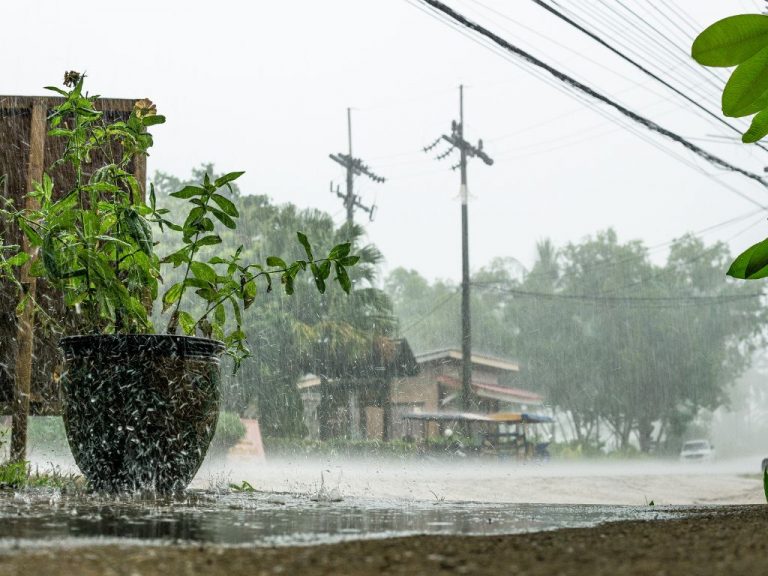
Monsoons bring so much joy and happiness to our lives. After facing a hot summer season, we all wait excitedly for the monsoon. The refreshing change fills our lives with happiness and gives a rejuvenating experience. With all this, one should stay safe in monsoon season.

With enjoyment you should also pay attention towards your health. We all have experienced so many diseases spread during this time. So it is better to take care of ourselves during the monsoon so that we can have a fantastic time without falling ill. Moreover, you can track your vitals using our Aarogyaone app.

Through the blog, we will share some tips to follow during monsoon season.

Important Tips To Stay Safe In Monsoon

Make your monsoon season happy and happening by following the below-mentioned tips. When you have good health you can live your life fully.

Maintain Good Hygiene

Cleanliness is an essential part of good health. Monsoon is all about the rainy season because of which water gets collected. Further, it generates so many diseases like viral fever, malaria, dengue, etc. Hence we should make sure to keep our surroundings clean.

Further, ensure to wash your hands with soap before eating or touching your face. We will recommend to so hand-wash frequently.

Say No To Raw Food

Try and consume properly cooked hygienic food. You should not eat raw vegetables, salads, etc.

Avoid Junk Food

Even in general life, one should not eat street food or junk food, but in monsoon eating street food can be dangerous for your health.

Drink Filtered Water

In order to stay healthy, one should take clean water. Keep it boiled or filtered because water is the main source for our body and the majority of the diseases get generated because of it.

What Diet and Nutrition Should You Take?

During monsoon, we all should take care of our immune system. Here we are recommending eatables that one should prefer during the season:

  • Consume Fresh Fruits & Vegetables: Always eat seasonal fruits such as pears, apples, etc.
  • Herbal Teas: To boost immunity and maintain good digestion, one should take herbal teas. Use ginger with tulsi & peppermint
  • Stay Hydrated: Keep drinking warm water in order to stay hydrated and this process will flush out the toxins from your body.

Clothing and Footwear During Monsoon

Along with hygiene, diet, and nutrition, one should take care of their clothing. They play an important role in keeping you protected from infections

  • Wear Dry Clothes: Make sure, your attire is fry. Prolonged wet cloths may spread infections.
  • Footwear: Try to wear boots or shoes to keep your feet protected from mud because, during the rainy season, the roads get muddy.

Home Environment

  • Ventilation: There should be proper ventilation for reduced humidity
  • Mosquito Control: Keep using mosquito nets, especially for kids and senior persons.
  • Clean Surrounding: Make sure, there is no stagnant water in your surroundings.

Perform Regular Exercise

  • Keep doing some physical activities. We know, during heavy rain, going outside is not possible but keep performing some indoor exercises. You can do yoga, and stretching to maintain your fitness level.
  • Maintaining mental health is equally important. To keep your mental status balanced, you should perform meditation and deep breathing.

Medical Precautions

Make sure you, your kids, and your grandparents are vaccinated against diseases that get prevalent during the season. Keep consulting with your healthcare providers. Also, don’t forget to track your vitals.

Final Thoughts

So guys, following the tips you can stay protected during monsoon. We have shared tips from hygiene to clothing to home environment to medical care. Adopt these tips and keep yourself healthy and happy.

We hope you will enjoy the monsoon season! Have a great time! Keep chilling!

PHR vs EHR: What’s the Difference?

With the evolution of digital technology in the healthcare sector, PHR and EHR terms are being used very frequently. Do you know what is the difference between PHR and EHR? PHR (Personal Health Record) and EHR (Electronic Health Record), both manage health records in digital form but with different objectives. In this blog, we will get to know about PHR and EHR individually along with the significant differences.

What is PHR (Personal Health Record)

As its name, PHR manages patient’s personal health information such as prescriptions, lab reports, medications, medical history, medical events, allergies etc. With the foundation of PHR apps like Aarogyaone, patients can access their health records anytime anywhere. Also, they have full control of the medical records. They can update their health information and share the reports with doctors with their consent.

 

Exploring Aarogyaone: A PHR App

Aarogyaone is a PHR app authorized by NHA where you can upload and manage all types of health records. Also, you are free to maintain the health history of your family members under the same account which means, everything is under one roof.

What is EHR (Electronic Health Records)

EHR App

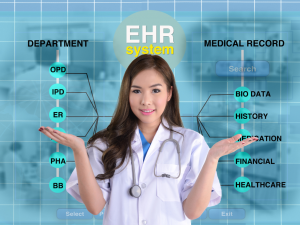
EHR also manages health records but healthcare professionals or hospitals/facilities maintain and access them. Using EHR applications, doctors or other healthcare professionals get complete details of the patients like their previous reports, prescriptions, medical history, diagnoses, medications, treatment plans, immunization dates, allergies, radiology images, etc.

Furthermore, EHR apps are like a centralized repository and are usually used within a single organization. Moreover, it can be used across multiple hospitals/facilities involved in a patient’s care. EHR apps give flexibility to doctors to get all the details about the patients quickly and make more informed decisions.

 Difference between PHR and EHR

By reading the above content you must have some idea about both types of the application. Now we will get to know their significant differences.

Difference between EHR & PHR

Elements PHR EHR
Ownership & Control Here, patients have full ownership & control to manage their health records. Depending on the patient’s consent, doctors can access the health information Here, healthcare professionals & hospitals/facilities have full ownership & control of the health information with limited control over the patients
Scope of Information They typically include a subset of health information that is relevant to individual patients They encompass comprehensive medical records managed by healthcare providers.


Access and Portability They are more portable and easier to access They are primarily maintained at the healthcare organization’s end.

Interoperability of EHR and PHR

Patients using PHR app can get their health record straight from the EHR if both the applications belong to ABDM eco-system. In order to access the medical records across PHR and EHR both, the application needs to be verified and approved by ABDM.

Further, if the PHR and EHR both are the part of ABDM eco-system, patients can access their health records anytime anywhere.

Final Thoughts

PHR and EHR, both applications are designed to enhance the healthcare infrastructure. PHR saves the personal health information of the patient and they have full control of their health records. On the other hand, EHR apps also manage patient’s health records but healthcare professionals and hospitals/facilities can access and maintain them.

Additionally, we have also mentioned the interoperability of EHR & PHR app through which health information can be extracted from one app to another. Here the condition is, both should belong to ABDM eco-system.

Using PHR and EHR apps, healthcare professionals can make more informed decisions because both applications have detailed health records from start to end. Overall, the applications play an important role in improving the health infrastructure of our country.

By the way: Have you started managing your health records using Aarogyaone PHR app? If not, Download now!

If you have any queries regarding PHR and EHR, feel free to connect. We will be more than happy to assist. Keep browsing the page for more information.


Polycystic Ovary Syndrome (PCOS) and Polycystic Ovary Disorder (PCOD) are the two common health issues with which the majority of women are getting affected. Through this blog, we are spreading awareness about lean PCOS & PCOD including their symptoms, causes, and effective management.

Before going in deep, firstly let’s understand PCOS and PCOD. What is the difference between PCOS and PCOD? Many times, people get confused with PCOS and PCOD. They use the term interchangeably but there are significant differences between them.

We know both problems somehow occur because of hormonal disbalance but they are different and hence we must understand them individually and precisely.

What is PCOS?

Polycystic Ovary Syndrome (PCOS) is a hormonal disorder that affects women in their reproductive age. Women facing PCOS problems deal with infrequent menstrual cycles that later on reduce the chances of getting pregnant. Moreover, in this problem ovaries don’t produce eggs because of follicles (small collections of fluid).


Symptoms of PCOS

Some symptoms may reflect if you have a PCOS problem. If you are consistently noticing such symptoms, you must take the opinion of your healthcare expert. Also, you can track your period using Aarogyaone if you forget dates, etc.

  • Irregular Menstrual Cycle: A common symptom of PCOS is infrequent periods that include unexpected heavy blood flow, missed periods, and delayed periods.
  • Increased level of Androgens: During PCOS, androgens (male hormones) increase and you will have excess hair on your face & body along with severe acne.
  • Increased Weight: Ladies put on excess weight if they have PCOS problems. Reducing weight becomes very challenging for them.
  • Polycystic Ovaries: In some cases of PCOS, the ovaries might be enlarged and contain follicles that surround the eggs. Further, it creates issues to conceive.

We strongly recommend to visit your doctor if you find anything serious.

What are the causes of PCOS?

The exact reasons or causes for PCOS are still not known but some factors may contribute. Furthermore, the causes include Genetic, Hormonal, and Environmental factors:

  • Family History: Women with a mother or grandmother having PCOS problems, may have the issue.
  • Insulin Resistance: Many women are insulin-resistant with PCOS. It means their body does not consume insulin effectively as a result of which androgen (male hormones) increases because of more insulin in the blood.
  • Diet & Lifestyle: The current lifestyle is very disturbed. Women with poor diets and sedentary lifestyles gain weight and further face PCOS.

What is PCOD?

Polycystic Ovary Disorder (PCOD) refers to a health condition for women where the ovaries contain many immature or partially mature eggs. Further, these eggs can become cysts over time. The symptoms of PCOD are somehow the same as PCOS.

Symptoms of PCOD

Irregular Period Cycle: Women having PCOD face irregular or missed periods.

Increased Level Androgens: Same as PCOS, PCOD can cause excess hair growth on the face & body along with acne, and male-pattern baldness.

Obesity: Like PCOD, weight gain and difficulty losing weight are often associated with PCOD.

Infertility: PCOD does not let you conceive. It makes conceiving challenging because of irregular ovulation or anovulation.

Causes of PCOD

The causes of PCOD are also similar to those of PCOS, involving genetic, hormonal, and lifestyle factors.

  • Family History: If your mother, sister, or grandmother is dealing with PCOD, the chance for you is quite high.
  • Insulin Resistance: Women with PCOD and insulin-resistant are at higher risk. When the body does not consume insulin effectively it results in a higher level of androgens.
  • Diet & Lifestyle: Women with imbalanced diets and fancy lifestyles gain weight and further face PCOD.

Understanding Lean PCOD and PCOS

Sometimes, women don’t gain weight during PCOS & PCOD but they have the problem. It is called lean PCOD & PCOS.

Lean women with PCOS or PCOD experience hormonal imbalances and related symptoms, but their condition can sometimes be overlooked or misdiagnosed because they do not present with the typical weight gain.

Along with weight, one should track the other symptoms as well. Overlooking may create serious problems in the future.

What are the symptoms of lean PCOS and PCOD?

The symptoms are quite similar as we have mentioned above. Only you need to exclude Weight Gain/Obesity.

  • Menstrual Irregularities
  • Excess Androgens
  • Ovulatory Dysfunction
  • Insulin Resistance

Causes of Lean PCOD and PCOS

The causes for lean PCOD and PCOS are similar to those in non-lean cases:

  • Family history
  • Hormonal Imbalances
  • Lifestyle Factors

Effective Management of PCOD and PCOS

Managing PCOD and PCOS requires a multifaceted approach that includes lifestyle changes, medication, and sometimes surgical interventions. The primary goals of treatment are to regulate menstrual cycles, manage symptoms like hirsutism and acne, and address any associated conditions such as insulin resistance or infertility.

Lifestyle Changes

Proper Diet: To deal with PCOD & PCOS one should include whole grains, fruits, vegetables, and lean proteins in their diet. It helps to manage insulin levels. Moreover, you should avoid processed foods.

Physical Activity: Doing exercise should be an integrated part of your routine. It improves overall health along with PCOS and PCOD management.

Weight Management: Keep track of your weight. Once your weight is controlled, the problem starts.

Stress Reduction: Stress is inversely proportional to happiness. Less stress, more happiness. It further keeps you healthy and eliminates the problem of PCOS & PCOD.

Lean PCOD & PCOS Management

Proper Diet: Maintain your diet including green vegetables, fruits, and other nutritional values.

Physical Activity: Keep doing some physical activities including running, walking, meditation, etc.

Stress Reduction: Don’t take stress. Try and keep yourself happy. You can’t control everything.

Conclusion

We know, that a large volume of women community are facing the problem of either PCOS or PCOD. We hope, that now you have a clear understanding of PCOS and PCOD along with symptoms, causes, and effective management.

Moreover, the problem is quite serious in lean women because diagnosis becomes challenging. Hence, we have covered that section as well. Despite obesity keep your focus on other factors as well.

With a healthy lifestyle, medical approach, and stress management, women with PCOD and PCOS can manage their well-being effectively.

If you find or have PCOD or PCOS, it is important to consult with a healthcare provider for an accurate diagnosis and personalized treatment plan.

Ref

https://www.ncbi.nlm.nih.gov/pmc/articles/PMC10042521/

https://www.mayoclinic.org/diseases-conditions/pcos/diagnosis-treatment/drc-20353443

As our technology is revolving, the healthcare sector is also getting upgraded accordingly. In this series, the evolution of family digital health wallets is one of the outstanding additions. With the commencement of such health wallets which are also called PHR apps, the management of health records became quick and easy. In this blog, we will explore, how the family digital health wallets change our lives along with their future scope.

Family Digital Health Wallets

Basically, a family digital health wallet is a digital platform where one can store and manage their medical records. Along with self, people can manage the health records of their family members as well. It eases accessibility because the user can get their required medical document anywhere anytime.

Key Features of Family Digital Health Wallet

Here are the major points that support the need for a digital health wallet in our healthcare system

  • Health Records Management: Using a PHR application like Aarogyaone, you can manage all your health records digitally. All health records like prescriptions, lab reports, and doctor’s notes. Vaccination cards, scans, images, etc.
  • Medical Events Track Records: Usually we forget our past treatments or hospitalization history. But with the family digital health wallet Aarogyaone, you can keep track of all medical events like surgery, special treatment, etc.
  • Consent-Based Quick Sharing: Using a family digital health wallet, users can share their health records with healthcare professionals as and when needed. The document sharing will be done with the user’s consent only.

Healthcare & Family Digital Health Wallets?

We are living in a digital age where things are much faster and smarter. Day by day we all are getting connected to new technologies. Hence we must include digital health wallets in order to strengthen our healthcare system. Moreover, below mentioned are the features that explain the futuristic role of the digital health wallet

  • Centralized Health Information: We have mentioned above, that a digital health wallet like Aarogyaone stores all the health records and makes them available as and when needed by the user. Hence to quickly access your medical documents, you must have a digital health wallet.
  • Quick Accessibility: Each passing day is getting technical stronger and we must adapt to the digital transformation if we want to live in the era smartly. With a digital health wallet, you will be a click away from your health history and documents.
  • More Accuracy: Carrying physical files may be risky but having health records in a wallet minimizes the scope of risk. You can have even minute details about your health journey.
  • Better Communication: With the foundation of digital health wallets, the communication between patients and healthcare professionals has become quite simple and quick. It allows for easier sharing of information with healthcare providers, leading to better-informed decisions and treatments.
  • Better Coordination: The family digital health wallet keeps track of each member’s health needs, especially in big families or for those caring for elderly parents or young children.
  • Improved Healthcare Outcomes: The world is getting digitally empowered and so is our healthcare domain. Using a family digital health wallet makes you confident because it comes up with accurate and comprehensive health information, & ensures better diagnosis, treatment, and follow-up care.

The Future of Family Digital Health Wallets

We all are very well aware of how our government is encouraging people to go digital for their health journey. Moreover, so many lives are saved and offered quick treatment using digital health wallets. Seeing all the parameters and user benefits, the future of the family digital health wallet is quite promising.

Also, we can expect the below-mentioned points to get integrated with family digital health wallets to make them more advanced and user-friendly.

  • Health Insights with Artificial Intelligence and Machine Learning
  • Virtual Healthcare Services Like Telemedicine and Quick Bookings
  • Data Privacy with Blockchain Technology
  • Access to Global Health Management

How can you get a Family Digital Health Wallet?

If you are looking to manage your and your loved ones’ health records digitally, follow the below-mentioned steps:

  1. Go to the Play Store
  2. Download Aarogyaone application
  3. Register using your mobile number
  4. If you have an ABHA account, you can log in with your ABHA number as well.
  5. If your ABHA account is still not created, Create Your ABHA.
  6. Now you can manage/upload all your health records

Final Thoughts

Family Digital Health Wallets are set to transform the way we manage our health information. By centralizing and securing health data, the PHR applications make it easier for families to access, share, and manage health information.

We believe, with the right approach, Family Digital Health Wallets can lead to better health outcomes, more coordinated care, and a more efficient healthcare system. If you have any queries regarding the family digital health wallet Aarogyaone, feel free to connect.

Keep browsing the page and stay safe, stay healthy.

Today we discuss Caretakers Need a Personal Health Record App. Caretakers are the main pillars of a family who look after kids, seniors, or any physically challenged person. Usually, family members act as caretakers. For example, the family’s son, daughter, daughter-in-law, and grandchildren look after their old parents/seniors. Along with their daily duties, they perform their job as a caretaker.

Here comes the role of the Personal Health Record (PHR) like Aarogyaone where they can manage all the health-related documents along with other beneficial services. In the blog, we will get to know the reasons why caretakers should install Aarogyaone PHR.

What is PHR?

Before knowing the reasons, one should know what PHR is. PHR is a digital health application or digital health wallet where people can manage their health records. Further, they can access and share these health records whenever they want.

Using the Aarogyaone PHR Application you can save all types of medical records:

  • Prescriptions
  • Lab Reports
  • Scans
  • Discharge Summary
  • Vaccination Summary
  • OPD Consultation
  • Diagnostic Reports etc

Furthermore, all the medical events will be managed which further helps doctors to make more informed decisions regarding one’s health. And when it comes to our kids or old parents, all their health documents should be at the tip. With Aarogyaone you can access their health records anytime anywhere.

Why should caretakers have PHR Applications?

We are living in a digital era and everything is being managed smartly. Even our government is encouraging people to go digital in order to manage their health journey. Furthermore, they are promoting PHR applications under their ABDM program so that people can have their health records aggregated.

Here we are mentioning the key features of Aarogyaone and these reasons will definitely motivate you to use this PHR application for your loved ones.

  1. Health Record Management & Sharing

With the PHR application, Caretakers can manage (upload, access, delete) all the health records at their convenience. Also, these records can be shared with doctors as and when needed. However, no need to worry about privacy, these data are sharable with the user’s consent only.

  1. Medication Management

In day-to-day life, a caretaker is responsible for managing the medicines of the old people. Usually, the son, daughter, or daughter-in-law executes these responsibilities. If they are not there, the family hires professional caretakers.

Using the advantage of digital empowerment, caretakers should use the PHR application for medication management, especially for patients with chronic conditions. A PHR helps keep track of all prescribed medications, dosages, and schedules. Moreover, if the caretaker is replaced, the new one can carry on the charges efficiently.

  1. Detailed Medical History

One of the main benefits of a PHR application is that it collects all medical information in one place. This includes past diagnoses, treatments, medications, allergies, immunizations, and surgical histories. For caretakers, having a comprehensive medical history is invaluable. Whenever needed, these medical histories can be shared with the proceeding healthcare professionals.

So many times, we miss old reports or prescriptions because of which doctors need to give more time, run a few tests, etc. It all becomes time-consuming and enhances our expenses. To avoid the situation, we should have all the records on the digital health wallet which is feasible with Aarogyaone.

  1. Better Health Management/Understanding

Being a caretaker (either personal or professional) you should have all the information regarding the health issues of the person. For example, if there is a kid whose next vaccination is due, and you are unaware of it or your old parent needs to be tested for diabetes and you forgot. What will happen? It all can lead to some serious problems.

We never know, what is going to happen next. But when we have their health records, medications, vaccination details, test records, allergy details, etc with us, we can offer better care.

  1. Emergency Preparedness

In emergencies, having immediate access to critical health information can save lives. A PHR provides essential details such as emergency contacts, current medications, and allergy information. As you are someone’s caretaker, you need to prepare for all the possible conditions in which an emergency is one.

We always hope the best for everyone but everything in this world is uncertain. Hence to avail quick treatment to your old parents, you should have a PHR application for sure.

Final Thoughts

If you think, a PHR application is just an app to manage your health records, you are wrong. For caretakers, it is a powerful toolkit that offers emotional, balanced, and efficient care.

Moreover, the life of the caregivers also becomes easier with the PHR application as most of the time they get alerts in advance and can save the situation from becoming worse.

So guys, to manage above things Caretakers Need a Personal Health Record App. Whether it’s managing medications, preparing for emergencies, or understanding the patient’s needs, a PHR is an outstanding resource that empowers caretakers to provide the best possible care.

Are you aware of Healthcare Challenges in India? Our healthcare sector has advance infrastructure because we have hospitals like AIIMS where all the medical facilities are available. Apart from that there are so many technically smart private hospitals to take care of the people at the earliest. Despite all these, some remote areas are unable to access the services because of their location.

Today, we will discuss the major healthcare challenges in India. What is holding us back? Knowing them will help us to get concrete solutions. Before jumping to the topic, we know our government is aggressively working to raise the healthcare infrastructure and, in this series, they have initiated so many health missions under their ABDM (Ayushman Bharat Digital Mission) program.

Furthermore, the World Health Organization says everyone should get good healthcare, no matter where they live. As per our research we have found, some healthcare challenges in India that are stopping us from reaching the level where we want to be. Let’s have a look at them.

Major Healthcare Challenges in India:

Awareness Of Health: It is very common practice, that many of us don’t care for our health. They don’t know how to maintain hygiene or first aid treatment while being sick. People believe, that sickness, seasonal fever, cough, cold, etc will go on its own. They simply live in their routine work.

We believe they should be given the right education where they should be taught “Self-Care”. Once people start maintaining hygiene and take the right steps at the very initial stage of sickness, the majority of health issues will be solved before reaching the hospitals.

Specialized Healthcare Infrastructure Accessibility: This problem majorly belongs to remote areas where PHCs (Primary Health Services) are available but not specialized healthcare services. In order to get specific treatment or consultation, the patients have to rush to the cities to get medicines or consultations. Sometimes in serious conditions, things go out of control.

To overcome the problem, along with PHCs (Primary Health Centres), Telemedicine can play an important role. People/patients living in remote areas can connect to a specific medical expert and depending on their health condition, a prescription shall be given.

Shortage of Qualified Medical Experts: The Medical domain has a shortage of qualified experts in the specific medical field. Due to the shortage of qualified manpower, patients need to wait for their turn. Moreover, the problem is majorly found in the rural areas.

To solve these issues, we should have more medical colleges and training centers. There should be proper training programs to attend to patients appropriately and guide them efficiently.

Health Insurance Awareness:  Under the government’s PM-JAY program, an Ayushman Card is given. The card covers health expenses of up to 5 lakhs INR for the needy families of the society as per SECC (Socio Economic and Caste Census). Many people in this class can have their Ayushman Card but they are unaware of it.

Apart from that there are so many insurance plans are available that cover our health expenses. The premiums towards such insurance are genuine and worthy. However, many people are still not aware of it.

To solve the problem, people must have information about such programs. They can get world-class medical facilities either free of cost (if they are eligible for the Ayushman Card) or by taking health insurance plans whose premiums are pocket-friendly.

You can refer to our blog (How to check your Ayushman Card Eligibility) to get more information.

Accountability: Private hospitals are doing their best to save people’s lives by providing world-class treatment. However, in some private hospitals’ patients have to run behind unnecessary lab or diagnostic tests. Sometimes medical team gives higher dosages of medicines to the patients. Earning money is their ultimate aim. Sometimes medical staff don’t treat patients well or make mistakes.

We need to make sure that they are responsible and they must execute their duties. To solve the problem, there should be a place where people can lodge their complaints. Higher authority should intervene so that people can get proper treatment.

Final Thoughts

We hope the above-mentioned Challenges of the healthcare sector in India are clear now. As we all know health is wealth. and when we are fit, we can conquer all the other problems of our lives.

To fix these problems, we need to work together. The government should spend more money on healthcare and make sure there are enough hospitals and clinics in villages. They should also train more medical experts to attend to the patients as soon as possible.

Apart from that, the healthcare facilities should be accessible to everyone. We can go for Telemedicine actively. However, there should be some brackets for private hospitals so that they can’t charge more and people can get quality treatment in pocket-friendly manner.

Along with the government, it is our primary responsibility to contribute our bit to strengthen India’s healthcare infrastructure. We should spread awareness for “Self-Care” and motivate people to help others (especially the illiterate people) wherever they can.

Furthermore, we are living in a digital era where we all have basic information to take care of ourselves. But we ignore them or take them lightly. The majority of health issues come because of poor or unbalanced lifestyles.

For example: We are quite aware, that eating junk food, not doing physical activities, and less than 8 hours of sleep, can harm our health. Most people don’t care, they simply follow these bad habits for their short-term happiness. But it is high time, we should take ownership of our health and only then we can hope for advanced healthcare infrastructure for our country.

We always wish you good health! Let’s make India fit and healthy!

Overview: Ayushman Bharat Card

So many people are still unaware of the process of applying Ayushman Bharat Card. As we know, our government has launched the facility to support the needy class of society. The Ayushman Card gives them health benefits of INR 5 Lakhs per year per family. But so many people still browse for “How To Apply For Ayushman Bharat Card?”

Our blog contains all the information and steps and following them one can easily apply for the Ayushman Bharat Card. Before application, you must check your eligibility for the Ayushman card because the facility is given to financially challenged families. In our previous blog, we shared information about “Eligibility for Ayushman Card”. You can refer for detailed information.

Steps to apply for Ayushman Bharat Card

Check your Eligibility for Ayushman Bharat

  1. Visit government website: https://pmjay.gov.in/
  2. Click “Am I Eligible?”
  3. Enter your Mobile Number and Click on VERIFY (Green Color)
  4. Once the system will recognize the Mobile Number, the AUTH_Mode Will Be Mobile_OTP automatically
  5. Enter the OTP you have received on the Mobile Number. If you did not receive the OTP click on “RESEND OTP”.
  6. Enter the Captcha
  7. Click on Login
  8. After successfully “Login”, you will be taken to the next page.
  9. A table format view will be shown.
  10. From the table you need to select
    1. SCHEME,
    2. STATE as per your Aadhar Card
    3. Sub Scheme
    4. District
    5. Search by (The way you want to get searched. Select any of them: Name, Aadhar Card, Family ID, Location-Rural, Location-Urban, PM-JAY ID)
  11. Once you select all the information, click on Search
  12. If you will be Eligibility, your name will be shown otherwise it will say “No Beneficiaries found in given Search Criteria

Apply for the Ayushman Card

If you are eligible for Ayushman Card, you need to offline in order to apply for your Ayushman Card. The process is very simple as mentioned below:

  1. Visit your nearest Common Service Center (CSC), Public Service Center, or UTI-ITSL
  2. Carry your family’s ID card along with one identification document (Aadhaar Card, PAN Card, Driving License, Voter ID, or Government ID).
  3. Submit the documents to the staff member available at the center.
  4. Fill out the form given by the staff member. If needed, they will guide you.
  5. Once the form is accepted, the card will be issued with all the health benefits.

How To Add Family Details to Ayushman Card

  • If you are looking to add family details, Click on Add Family Details
  • Enter the Ration Card Number, click on Check details
  • If the Ration Card is associated with the family member, details will be shown.

So, following the above-shared steps, you can apply for your Ayushman Card. In the coming section, we will mention how can you download your Ayushman Card.

How To Download Ayushman Card

  1. Visit government website: https://pmjay.gov.in/
  2. Click “Am I Eligible?”
  3. Enter your Mobile Number linked with PM-JAY (Ayushman Bharat)
  4. For authentication you will get an OTP.
  5. To confirm your identity, enter the OTP
  6. Once the OTP is verified, you will be taken to DOWNLOAD AYUSHMAN CARD
  7. Click on the DOWNLOAD Ayushman Card Button and collect your card.
  8. You will get the Ayushman Card in PDF format, so save it on your device.
  9. For the future, you can also take a print copy.

Final Thoughts

So following the above steps people can easily apply for their Ayushman card. As we have mentioned earlier Ayushman Card is given to financially challenged families as per the SECC verification. We hope, now you have a clear idea about the Ayushman Card application process.

Moreover, if any query comes up, feel free to get in touch. We will be more than happy to help! Keep browsing the page to stay updated with recent digital health initiatives. We always wish you good health!

References

https://pmjay.gov.in/#ayushman-appl

https://ayushmanbharat.mp.gov.in/index.php?/ayushman-card-process

https://www.youtube.com/watch?v=FPURyFO_Yvs

This blog helps you to get information using which you can know your Eligibility for Ayushman Card (PM-JAY).

PM-JAY

Pradhan Mantri Jan Arogya Yojana which we call PMJAY is a health insurance plan initiated by the Indian government, especially for that class of society who has the lowest income as per the SECC database. Such families get support for 5 lakhs INR towards their medical expenses. In our previous blog we have written detailed information about PM-JAY benefits and if you are looking to refer, please browse our blog.

Now a question that usually comes to one’s mind: How can I check my eligibility for PM-JAY? Or what criteria need to be fulfilled for an Ayushman Card or my eligibility for an Ayushman Card?

Our blog contains answers to each of such queries. Unlike the ABHA Card, the everybody can’t get  Ayushman Card. The medical cover under PM-JAY is available for needy families only. In order to get or apply for Ayushman Card, firstly you need to verify your eligibility for the same.

How To Check Your Eligibility for Ayushman Card?

One can check the eligibility for the Ayushman card “ONLINE & OFFLINE”. Follow the steps and then you will come to know, whether you can get medical benefits under PM-JAY or not.

Online Method:

  • Visit official website https://www.pmjay.gov.in
  • On the top line of the home page you will “Am I Eligible”, click on it.
  • Enter Your Mobile Number
  • Fill the Captcha
  • Click on Generate OTP
  • Enter the OTP that you have received on your Mob. No
  • Verify the OTP
  • If the OTP is verified, you will be taken to the detailed section otherwise you will be on the same page.
  • Enter the asked information accurately such as your Name, State, Family Members, Income, Age, etc.
  • Once all the details are filled “SUBMIT” it.

After analysis, you will get an update about the benefits that you can get. Also, if you are not eligible for the benefit, the portal will explain the reason as well.

Offline Method:

If you don’t have online access, no need to worry. You can check your eligibility for Ayushman Card offline as well.

  • Visit your nearest CSC i.e. Common Service Centre.
  • Submit all your documents needed to check Ayushman Bharat eligibility such as Identity proof, income proof, family details (Ration Card), etc.
  • Now the staff member of the centre will help to check your eligibility for PM-JAY.

Once you are declared as “Eligible for Ayushman Card”, the process is simple. All you need to sign-up/register for the card. Fill out the form with accurate information and submit it. After acceptance of the form, your Ayushman Card will be issued with all the benefits.

Ayushman Card Eligibility for Rural Areas (Rural Beneficiaries)

Above mentioned process is a general way through which the eligibility is analyzed and the Ayushman card is given to financially challenged families. But in rural areas, some other standards are followed in order to offer Ayushman Cards. Hence if you belong to a rural area and looking to check your eligibility for an Ayushman Card, here you go:

  • Families have crumbling houses (No proper roof/broken walls).
  • No adult member of age 16 to 59.
  • A woman is running home single-handedly and no men of age 16-59.
  • Families having disabled members
  • SC/ST community
  • People/families have no land and they rely on manual/daily work for their livelihood.

Depending on these criteria, families/persons can apply for the Ayushman Card, and once it is accepted, they will get medical benefits.

Ayushman Card Eligibility for Urban Areas (Urban Beneficiaries)

Government has specified 11 occupational categories who are eligible for PM-JAY Scheme. At the same time, it is also made sure by state government that SECC database is covered to verify the eligibility.

  • Street Vendors
  • Cobbler & Hawker
  • Electrician, Mechanic, Assembler and Repair worker
  • Ragpickers & Beggars
  • Domestic Worker, Handicraft Worker and Tailor
  • Washer-man/ Watchman (Chowkidar)
  • Construction Worker
  • Mason, Plumber, Welder, Painter, Security Guard, Sweeper, Mali, & Sanitation Worker
  • Transportation Workers like Drivers, Conductors, Cart Pullers and Rikshaw Pullers.

Such families or people need to share some identity proof like Aadhar and post that they can sign up for the Ayushman card. Fill out the form and submit it. Once approved, the card will be allocated.

Now, you must have some idea about the people/families that can be eligible for Ayushman Card. After reading the above content, if you think you can get take benefit of PM-JAY, visit the government portal https://www.pmjay.gov.in now and check your eligibility online.

Who is/are not eligible for PM-JAY/Ayushman Card?

There are some specific conditions for the people who are straight away non-eligible for PM-JAY. It includes:

  • State & Government Employees
  • Established Business Persons
  • People having good financial status
  • Families with all the basic needs.
  • Families having lands and farmhouses.
  • Tax Payers
  • People whose hospital stay is more than 15 days

Final Thoughts

So, we hope you have the idea to check your eligibility for PM-JAY. If you think you can get an Ayushman Card, first verify your eligibility. After approved eligibility, the Card will be issued with all the health benefits and medical cover of 5 Lakhs per family per year.

Also, if you are financially stable, share this blog with them who can avail the benefit. Also, if there is any query or concern, please feel free to connect. Furthermore, we will be more than happy to help. Also, keep browsing the page to get such important information.

Reference

https://nha.gov.in/PM-JAY

Pin It